Case Studies of Successful Environmental Justice Campaigns Worldwide
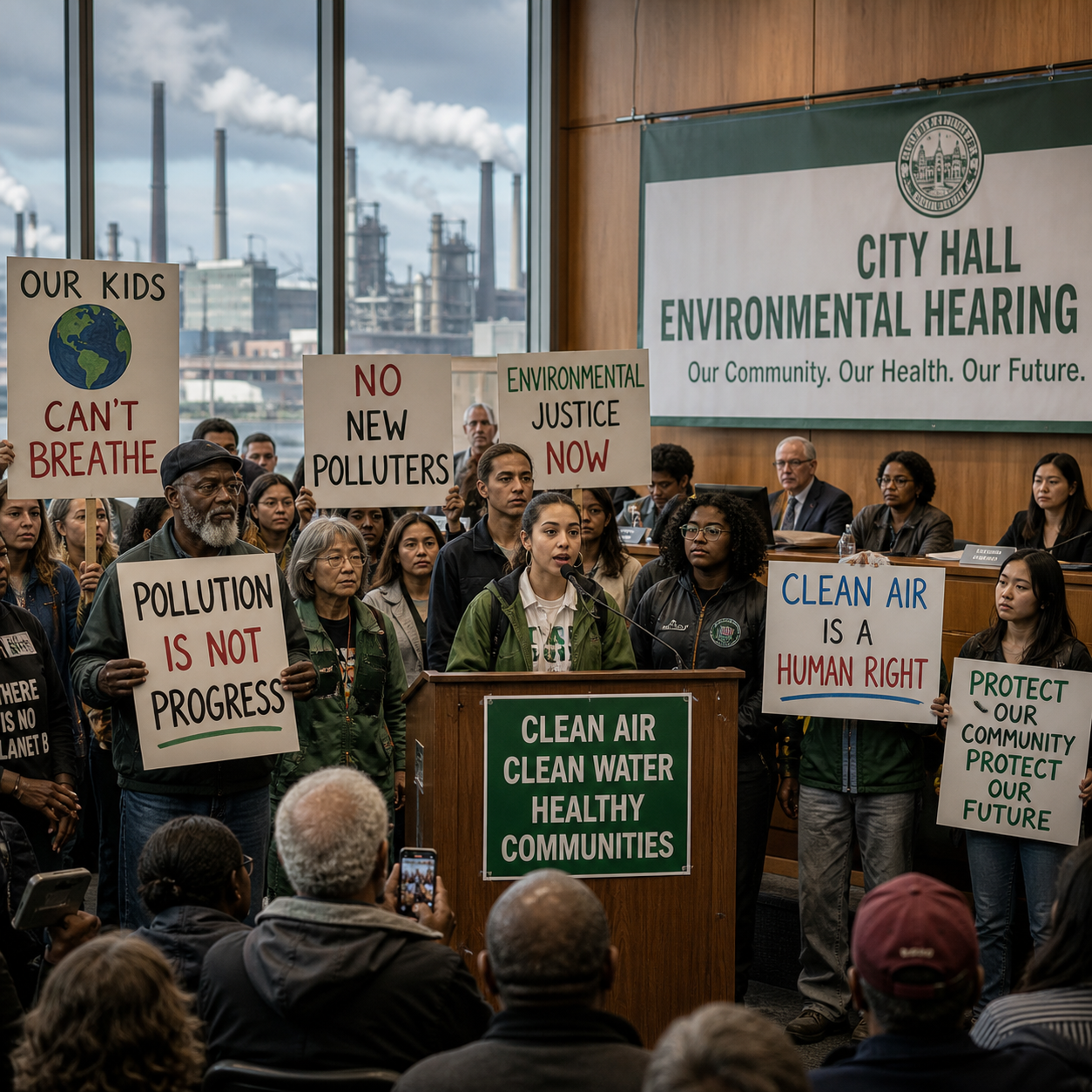
Environmental justice campaigns challenge the unequal distribution of pollution, climate risk, land loss, and environmental decision-making power. The strongest examples combine grassroots organizing with legal action, policy change, coalition building, and corporate accountability while keeping affected communities in charge of priorities.
What Makes an Environmental Justice Campaign Successful?
An environmental justice campaign succeeds when affected people gain lasting power, reduce environmental harm, and secure enforceable protections. A court victory or policy announcement may mark progress, but durable success also requires implementation, monitoring, and community control.
Environmental justice differs from a narrow conservation approach because it connects ecological damage with race, class, health, labor, Indigenous rights, and political representation. Campaigns often evaluate success through five questions:
- Did the community stop, reduce, or remediate a specific environmental threat?
- Did residents shape the demands, tactics, and definition of victory?
- Did authorities or corporations accept meaningful accountability?
- Did the campaign produce policy change that protects people beyond one location?
- Did it build leadership and institutions capable of defending those gains?
These criteria help distinguish an immediate win, such as closing a polluting facility, from systemic change, such as stronger permitting rules or recognition of Indigenous sovereignty. They also reveal why a campaign can be historically important even when its original demand remains only partly fulfilled.
Community-Led Campaigns for Clean Air, Water, and Land
Community-led advocacy has won environmental protections by combining local evidence, public organizing, and regulatory pressure. Residents most exposed to pollution often identify risks before government agencies do, then turn lived experience into documentation and political demands.
Warren County, United States: the birth of environmental justice organizing
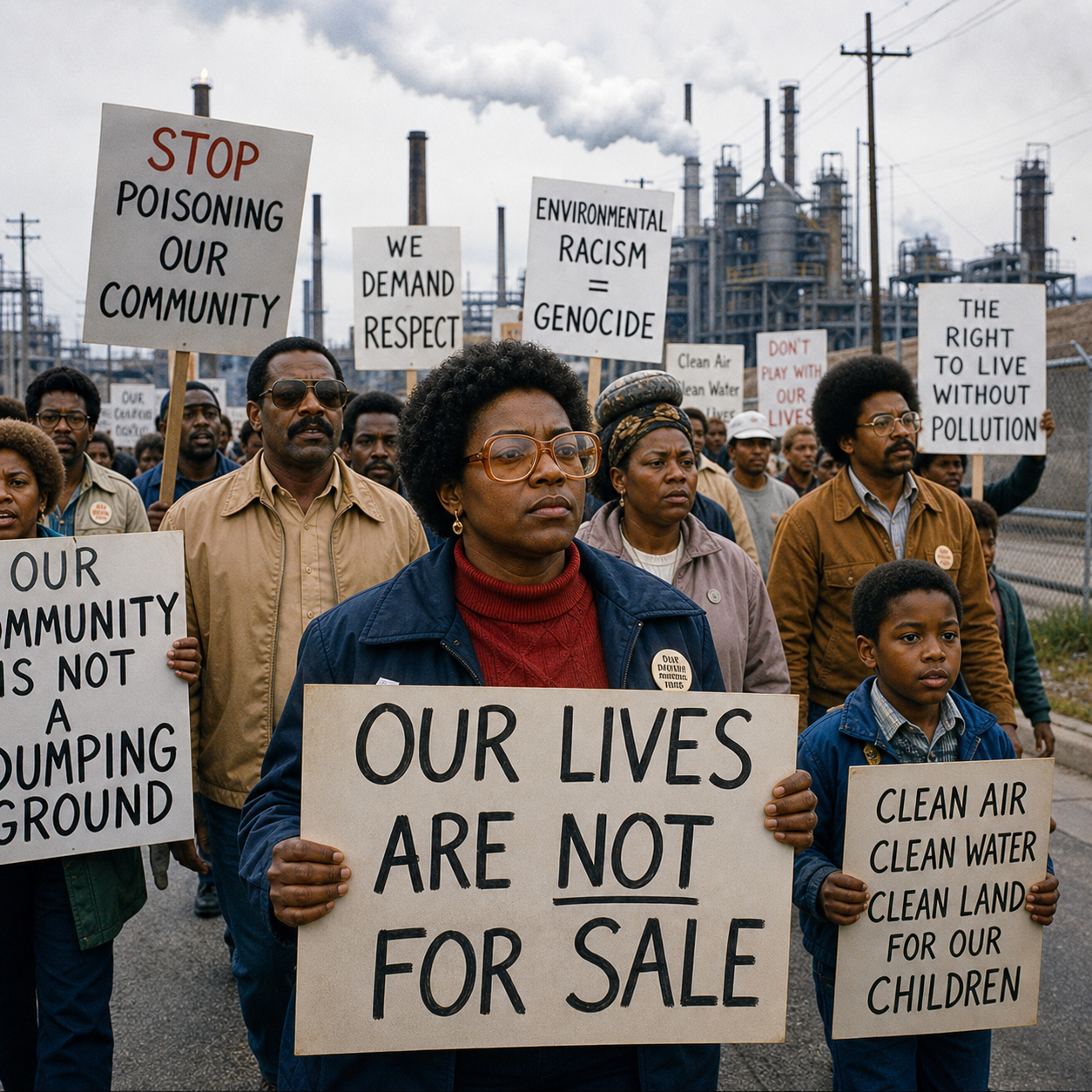
In 1982, residents of Warren County, North Carolina, opposed the placement of a hazardous-waste landfill in the predominantly Black community of Afton. The campaign linked environmental racism to civil rights: residents organized nonviolent protests, civil disobedience, church networks, and national media outreach.
The landfill was ultimately built, so the campaign did not achieve an immediate site-level victory. Yet its resistance helped popularize the term environmental racism and contributed to the modern environmental justice movement. Later research and federal attention, including the 1994 Executive Order 12898 on environmental justice, reflected concerns that activists had brought into public debate.
The case shows that success can include agenda-setting and movement formation. It also carries a warning: national recognition does not automatically remove contamination or repair a community’s health burden.
Flint, Michigan: residents force accountability for water contamination
Flint residents, community groups, doctors, journalists, and researchers exposed lead contamination after the city changed its water source in 2014 without adequate corrosion control. Residents demanded safe water, medical support, transparent testing, and accountability from public officials.
Grassroots testimony and independent scientific evidence challenged official assurances. Sustained public pressure helped trigger emergency responses, infrastructure investment, criminal investigations, and broader national attention to water inequality. The response remained incomplete: replacing infrastructure, addressing health effects, and rebuilding trust require years of work.
Flint demonstrates the value of pairing community knowledge with credible testing. Data became more powerful because residents controlled the questions it needed to answer.
Authoritative background on federal environmental justice policy is available through the U.S. Environmental Protection Agency’s environmental justice resources.
Indigenous-Led Environmental Justice Campaigns
Indigenous-led campaigns protect environmental justice by defending sovereignty, cultural survival, land rights, and the authority to make decisions about traditional territories. Their goals often extend beyond stopping one project to restoring relationships between land, governance, and future generations.
Standing Rock, United States: opposition to the Dakota Access Pipeline
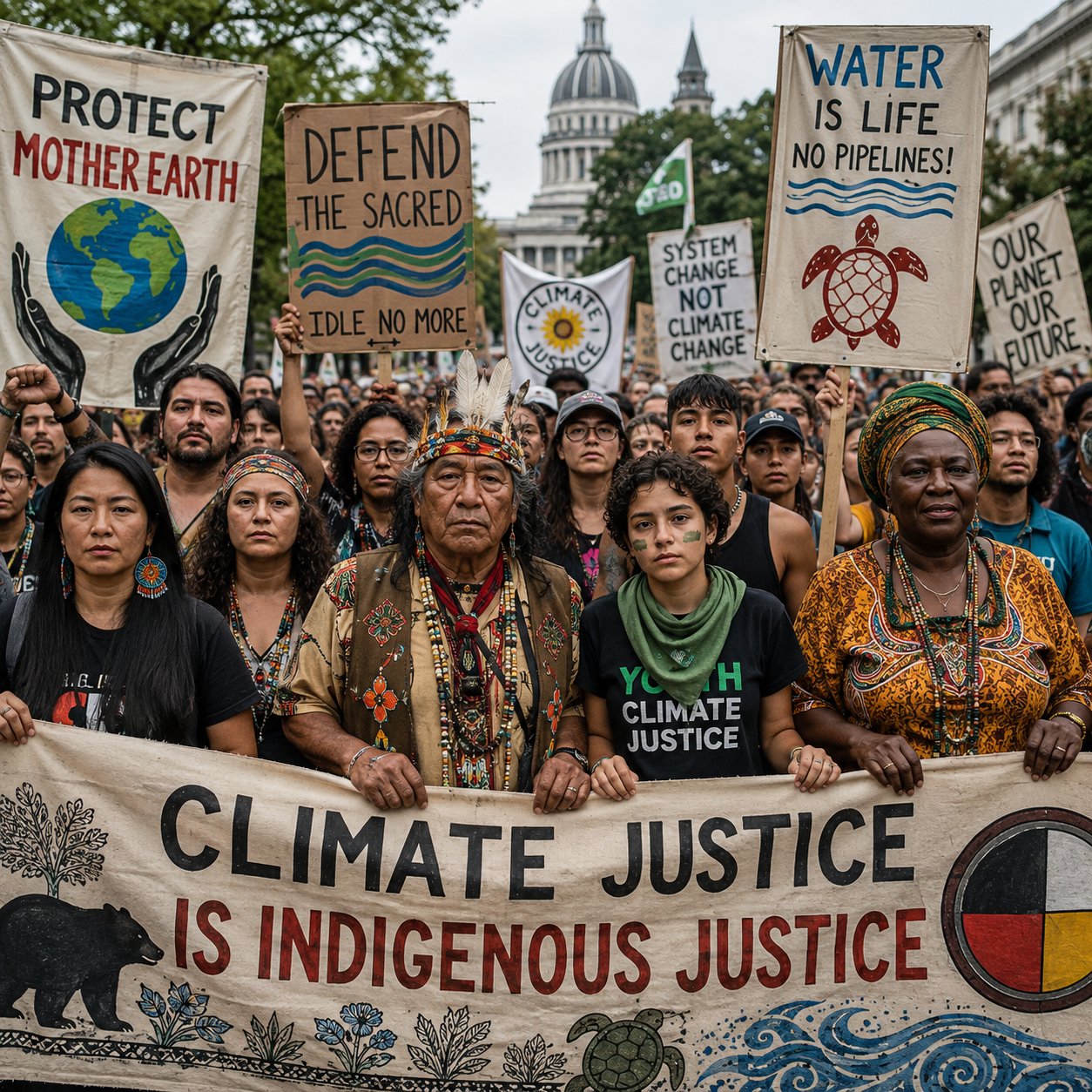
The Standing Rock Sioux Tribe opposed the Dakota Access Pipeline’s proposed crossing beneath the Missouri River near the Standing Rock reservation, citing risks to water, treaty rights, and sacred sites. Water protectors built a large movement involving Indigenous nations, veterans, faith groups, environmental organizations, and international supporters.
Prayer camps, nonviolent direct action, legal challenges, cultural education, and digital communication drew global attention. In 2016, the U.S. Army Corps of Engineers paused the easement process for a key crossing and called for additional environmental review. The pipeline later became operational, illustrating the limits of a temporary administrative victory.
The campaign nevertheless strengthened Indigenous visibility, mobilized new networks, and reframed fossil-fuel infrastructure as a question of treaty obligations and sovereignty. Its unresolved outcome shows why legal action and public pressure must be matched by long-term institutional strategy.
Indigenous resistance and climate justice in the Amazon
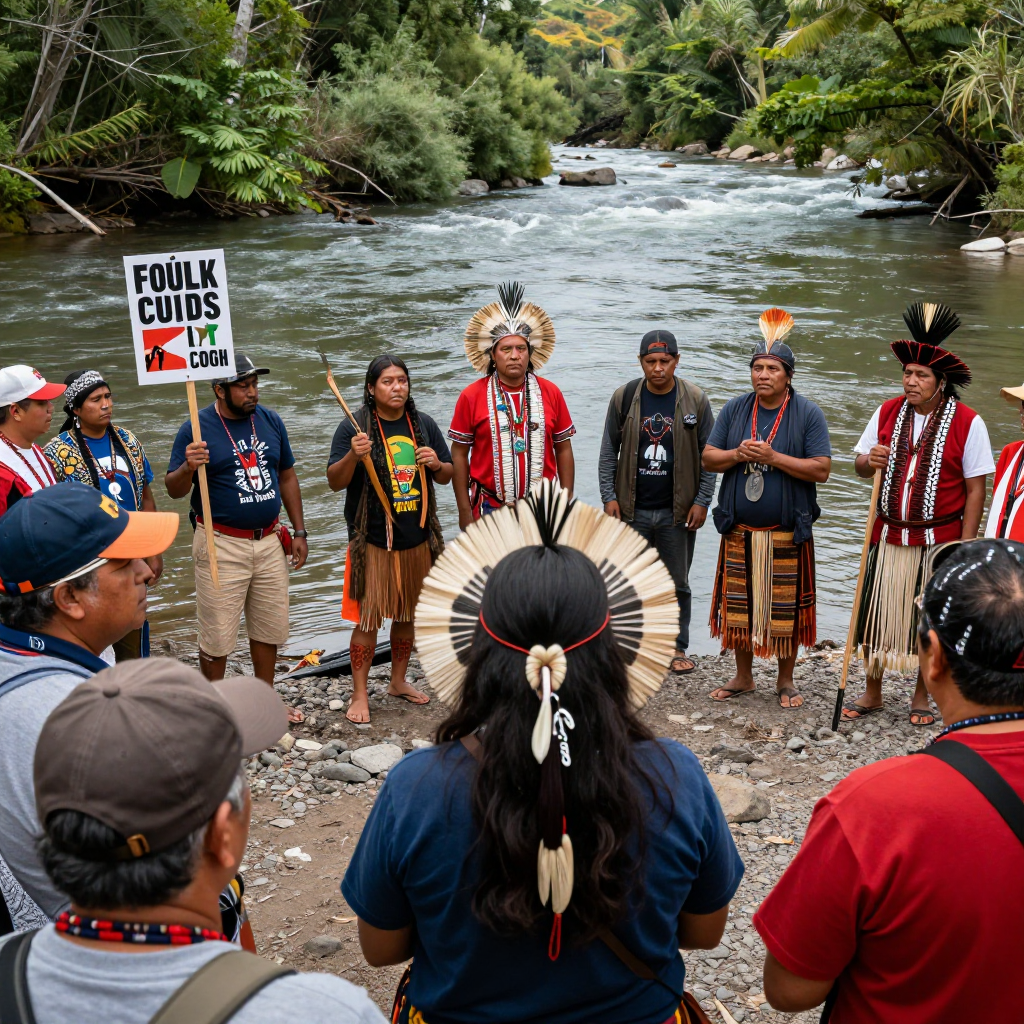
Across the Amazon, Indigenous organizations have challenged illegal mining, logging, dams, and extractive projects through territorial monitoring, international advocacy, litigation, and political organizing. Campaigns led by groups such as the Articulation of Indigenous Peoples of Brazil have connected local land defense with climate justice and human rights.
Community mapping, patrols, legal recognition of territories, and global pressure on governments and companies can protect forests while defending cultural autonomy. However, violence, weak enforcement, and economic pressure remain serious barriers. These campaigns make a crucial point: traditional knowledge is not a decorative addition to environmental policy; it is part of governance and territorial protection.
Campaigns Against Fossil Fuel and Extractive Projects
Campaigns against fossil fuel and extractive projects are strongest when local resistance joins coalition building, legal challenges, investor pressure, and a clear alternative vision. Opponents must often confront corporations with greater financial resources and governments that frame development as inevitable.
Ogoni, Nigeria: community resistance to oil pollution
The Movement for the Survival of the Ogoni People, led by community organizers including writer and activist Ken Saro-Wiwa, challenged oil pollution and political exclusion in Nigeria’s Niger Delta. The campaign demanded environmental remediation, fair resource governance, and greater community control.
Peaceful mobilization, international advocacy, and corporate accountability efforts placed pressure on the Nigerian government and Shell. The execution of Saro-Wiwa and eight other activists in 1995 exposed the dangers environmental defenders face. Subsequent legal developments, including a 2009 settlement involving Shell and Ogoni plaintiffs, demonstrated that litigation can create accountability even when pollution and remediation disputes continue.
Ogoni is a case of partial success: it elevated corporate responsibility and community rights internationally, while decades of contamination showed how difficult restoration becomes when enforcement is weak.
Anti-coal organizing in South Africa
Communities and civil society organizations in South Africa have opposed coal mines, power stations, and coal-linked pollution by combining public-interest litigation, health research, public hearings, and local organizing. Groups such as groundWork have connected air pollution with racialized spatial planning and the legacy of apartheid.
Legal challenges have helped establish that environmental approvals must consider climate impacts and affected residents’ rights. Campaigners have also pressed for a just transition that protects workers and communities economically dependent on fossil fuels. The central lesson is practical: stopping a project without planning for livelihoods can leave communities vulnerable, while a credible transition agenda broadens coalition support.
From Local Struggles to National or Global Policy Change
Local campaigns influence national or global policy when they translate place-based harm into a broader public issue without losing community control. Media networks, litigation, research partnerships, and political advocacy can carry a local demand into courts, legislatures, and international institutions.
The global climate justice movement illustrates this pathway. Youth-led campaigns such as Fridays for Future turned climate science into mass public action, while frontline groups emphasized that climate change intensifies existing inequalities. Their influence helped move public discussion toward loss and damage, a just transition, and differentiated responsibility.
Legal action has also expanded the policy conversation. In the Netherlands, the Urgenda Foundation’s climate case secured a ruling requiring the government to strengthen emissions reduction efforts. The case did not solve climate change, and implementation depends on continuing political action, but it showed how strategic litigation can convert climate obligations into a judicially reviewable duty.
Successful policy campaigns usually use a layered model:
- Local testimony: document who experiences the harm and how.
- Technical evidence: connect pollution or climate impacts to measurable risks.
- Legal framing: identify rights, duties, and procedural failures.
- Public narrative: explain why the issue matters beyond one community.
- Political leverage: target budgets, elections, permits, investors, or regulators.
Common Strategies and Lessons for Future Campaigns
The most transferable strategy is affected-community leadership supported by evidence, alliances, disciplined demands, and multiple forms of pressure. Campaigns should treat organizing, litigation, communications, and policy advocacy as complementary tools rather than separate tracks.
A useful planning framework is POWER: People, Outcomes, Proof, Escalation, and Repair.
- People: place residents, workers, and Indigenous authorities at the center of decisions.
- Outcomes: define specific demands, such as a permit denial, cleanup fund, health monitoring, or land-rights recognition.
- Proof: combine testimony, independent science, maps, public records, and economic analysis.
- Escalation: sequence petitions, hearings, media work, litigation, shareholder pressure, and nonviolent action.
- Repair: secure funding, enforcement, monitoring, and leadership development after the announcement of victory.
Coalition building works best when partners contribute resources without taking over. A national environmental organization may provide legal expertise, while local organizers provide legitimacy, relationships, and strategic direction. Campaigns should also protect participants from burnout and retaliation by sharing leadership and planning for security.
Challenges, Trade-Offs, and What Success Really Means
Environmental justice success is usually partial, contested, and long-term because communities face unequal power, implementation gaps, and continuing environmental threats. A policy can pass without funding, a court can rule favorably without enforcement, and a project can move elsewhere rather than disappear.
Common mistakes weaken otherwise strong campaigns:
- Declaring victory after an announcement: public commitments may lack deadlines or penalties. Demand written obligations, budgets, and independent monitoring.
- Letting outside experts set the agenda: technical partners can unintentionally displace residents. Use community-defined research questions and shared ownership of findings.
- Focusing only on opposition: rejecting a mine or pipeline may leave workers and local governments exposed economically. Pair resistance with a funded just-transition plan.
- Measuring attention instead of conditions: media coverage matters, but reduced exposure, restored land, recognized rights, and improved health protections are stronger indicators.
The case studies show why environmental justice campaigns should be judged across time: immediate protection, institutional accountability, redistribution of decision-making power, and conditions for future organizing. The most durable victories leave communities with stronger rights, better information, enforceable safeguards, and the capacity to challenge the next threat.