How Pollution Narratives Shape Public Policy and Environmental Legislation
Laws rarely emerge from data alone. Behind nearly every major environmental regulation is a story — a community's suffering made visible, a river catching fire, a child's asthma attack documented on a phone camera. The way pollution is framed, who tells the story, and which audiences receive it can determine whether a toxic crisis becomes a legislative priority or fades from public attention.
Understanding the relationship between pollution narratives and public policy is essential for anyone working in environmental advocacy, journalism, research, or government. The same contamination event can be framed as an isolated industrial accident, a systemic failure of regulatory oversight, or an act of environmental injustice — and each framing points toward a different policy response.
What Is a Pollution Narrative and Why Does It Matter?
A pollution narrative is the structured story told about an environmental harm event — who caused it, who suffered, what it means, and what should be done. These narratives carry political weight because they shape how the public and policymakers assign responsibility and urgency.
Framing theory, developed in communication and sociology research, explains why this matters so much. When a pollution crisis is framed as a public health emergency, it triggers different policy instincts than when the same crisis is framed as an economic trade-off or a technical regulatory dispute. The facts may be identical; the political response is not.
Consider how lead contamination in drinking water can be narrated. One framing emphasizes infrastructure failure and budget constraints. Another centers the neurological damage to children in low-income neighborhoods and the government agencies that ignored early warnings. Both are factually grounded, but only one creates the moral urgency that typically precedes legislative action.
This is why environmental advocates, journalists, and policymakers pay close attention to narrative construction — not as spin, but as a genuine mechanism through which communities translate toxic exposure into political demand.
The Science-to-Story Pipeline: Translating Data Into Public Concern
Scientific findings about pollution rarely move policy on their own. The path from peer-reviewed research to regulatory change almost always runs through storytelling.
Data on particulate matter concentrations or benzene levels in groundwater is essential, but it is abstract. What makes that data politically actionable is the human story attached to it — the family that can't sell their home, the farmworker with unexplained respiratory illness, the pediatrician seeing patterns that don't match the official risk assessments.
Researchers and scientists play a critical role in this translation process. When they communicate findings through accessible language, collaborate with affected communities, or provide expert testimony in legislative hearings, they become participants in narrative construction. The challenge is that scientific communication norms often favor caution and qualification, while effective policy narratives require clarity and moral weight.
The tension between scientific rigor and narrative power is real. Overstating certainty can undermine credibility; understating urgency can allow harm to continue. Effective environmental communication finds the space between those poles — accurate, but humanized enough to register as a crisis worth addressing.

Media, Messaging, and the Amplification of Environmental Issues
Media coverage determines which pollution crises reach the legislative agenda and which remain invisible. News organizations, documentary filmmakers, and social media platforms all act as amplifiers — or filters — for environmental harm stories.
Traditional journalism has historically shaped risk perception around pollution through editorial choices about what constitutes a story. A dramatic industrial spill with visible damage photographs easily. Chronic low-level contamination affecting a rural community over decades does not. This structural bias in media representation has historically meant that acute, visible pollution events attract regulatory attention while slow-moving toxic exposure in frontline communities goes underreported.
Documentary storytelling has at times bridged this gap. Films examining industrial agriculture, petrochemical pollution, or drinking water contamination have reached audiences that academic papers never would, creating the kind of broad public concern that opens what political scientists call a policy window — a moment when a problem, a proposed solution, and political will briefly align.
Digital media has changed the dynamics considerably. Communities affected by pollution can now document and share their experiences directly, bypassing traditional media gatekeepers. A video of discolored tap water or a neighborhood air quality monitor reading can circulate widely before any official response is issued. This shift has accelerated the timeline between pollution documentation and public pressure on regulatory agencies.
Grassroots Voices and Environmental Justice Movements
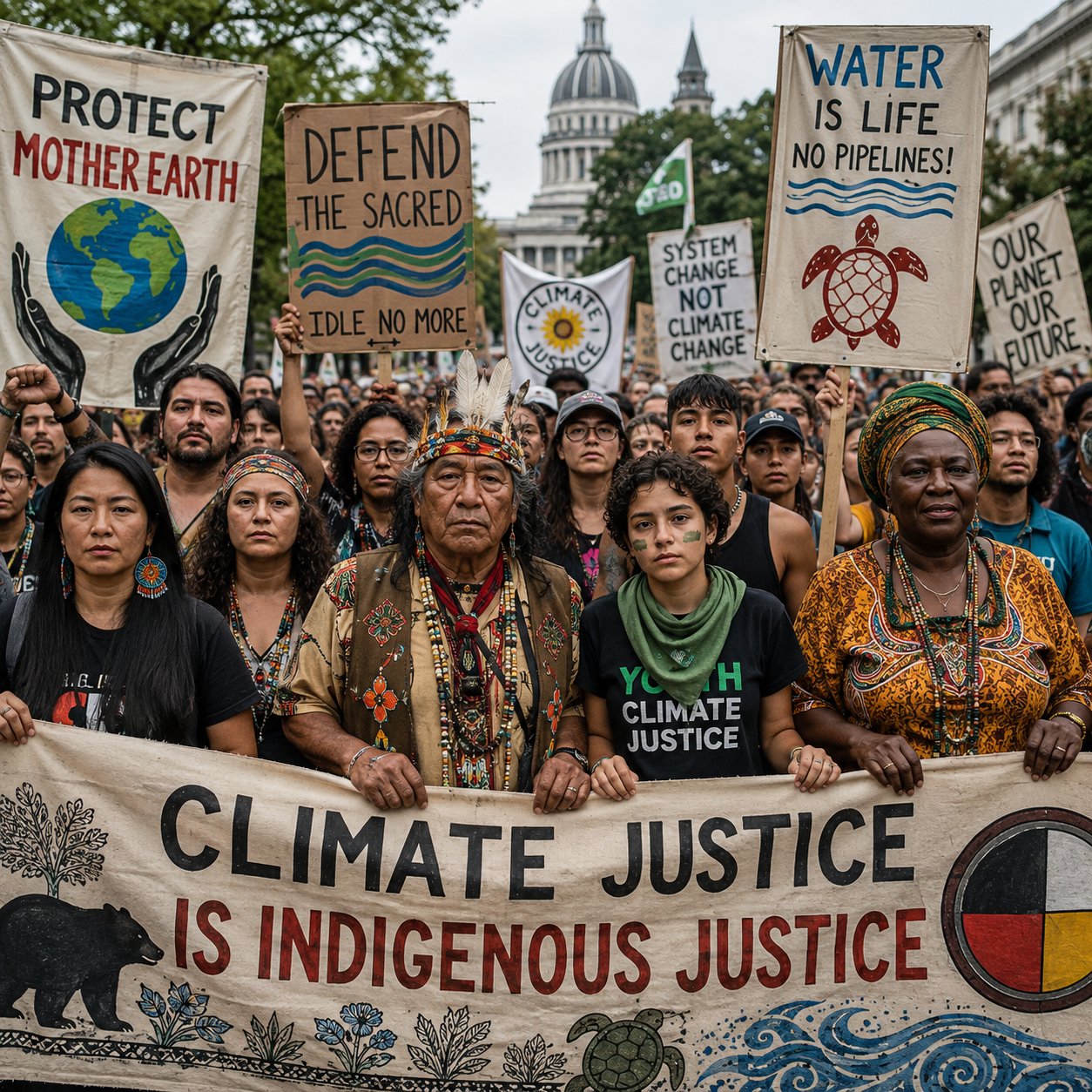
Frontline and marginalized communities have long understood something that mainstream environmental advocacy has been slower to recognize: personal testimony is a form of evidence, and collective narrative is a form of power.
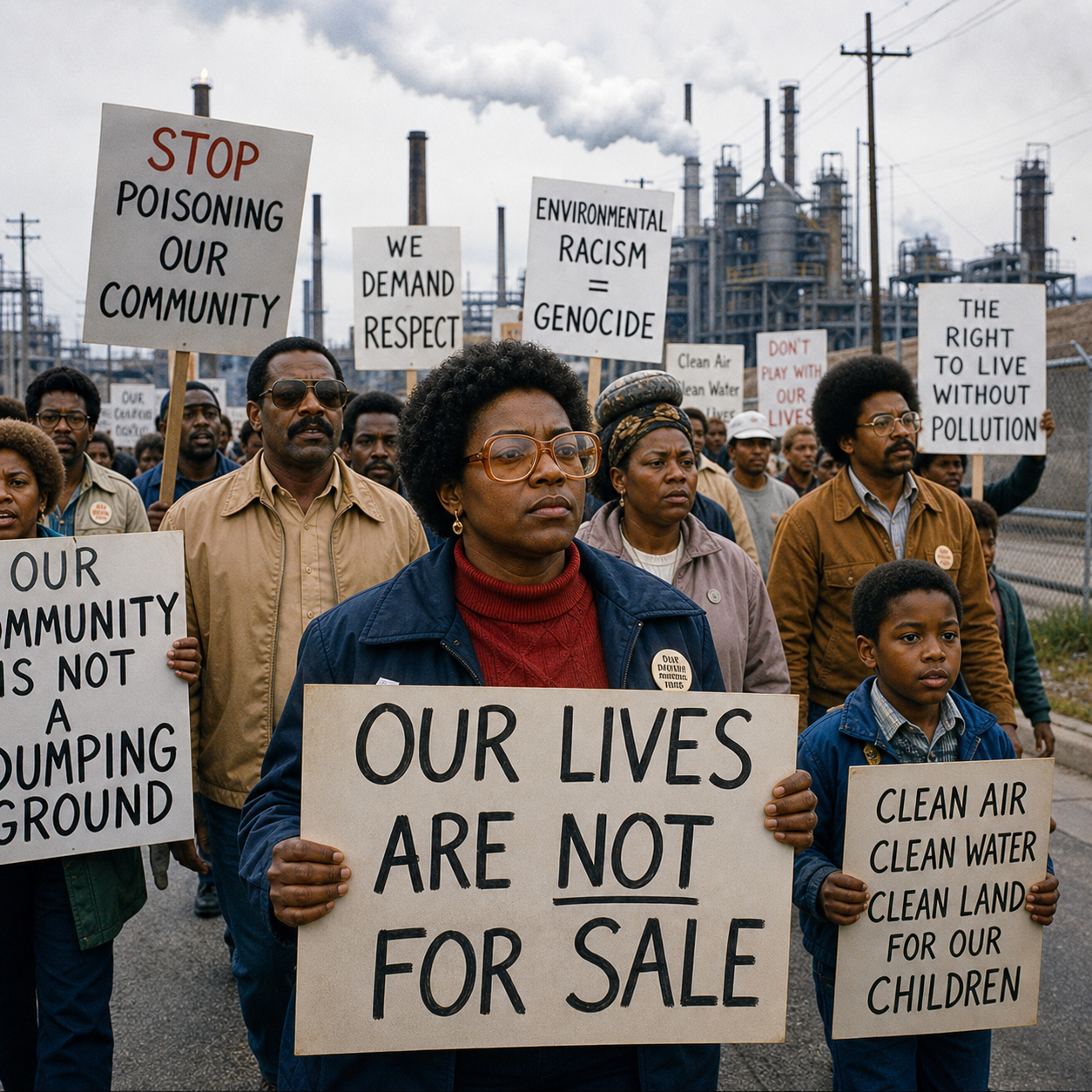
Environmental justice movements distinguish themselves from traditional environmentalism partly through their approach to storytelling. Where mainstream environmental campaigns have often relied on images of pristine wilderness or endangered species, community advocacy in frontline neighborhoods centers the lived experience of disproportionate impact — the asthma rates, the cancer clusters, the property values destroyed by proximity to industrial facilities that wealthier communities successfully excluded through zoning and political influence.
This distinction matters for policy. Testimony from residents who have lived with toxic exposure for generations carries a different kind of authority than expert witness statements, and it speaks to a different legislative concern: not just whether a pollutant exceeds a threshold, but whether the regulatory system has systematically failed certain communities.
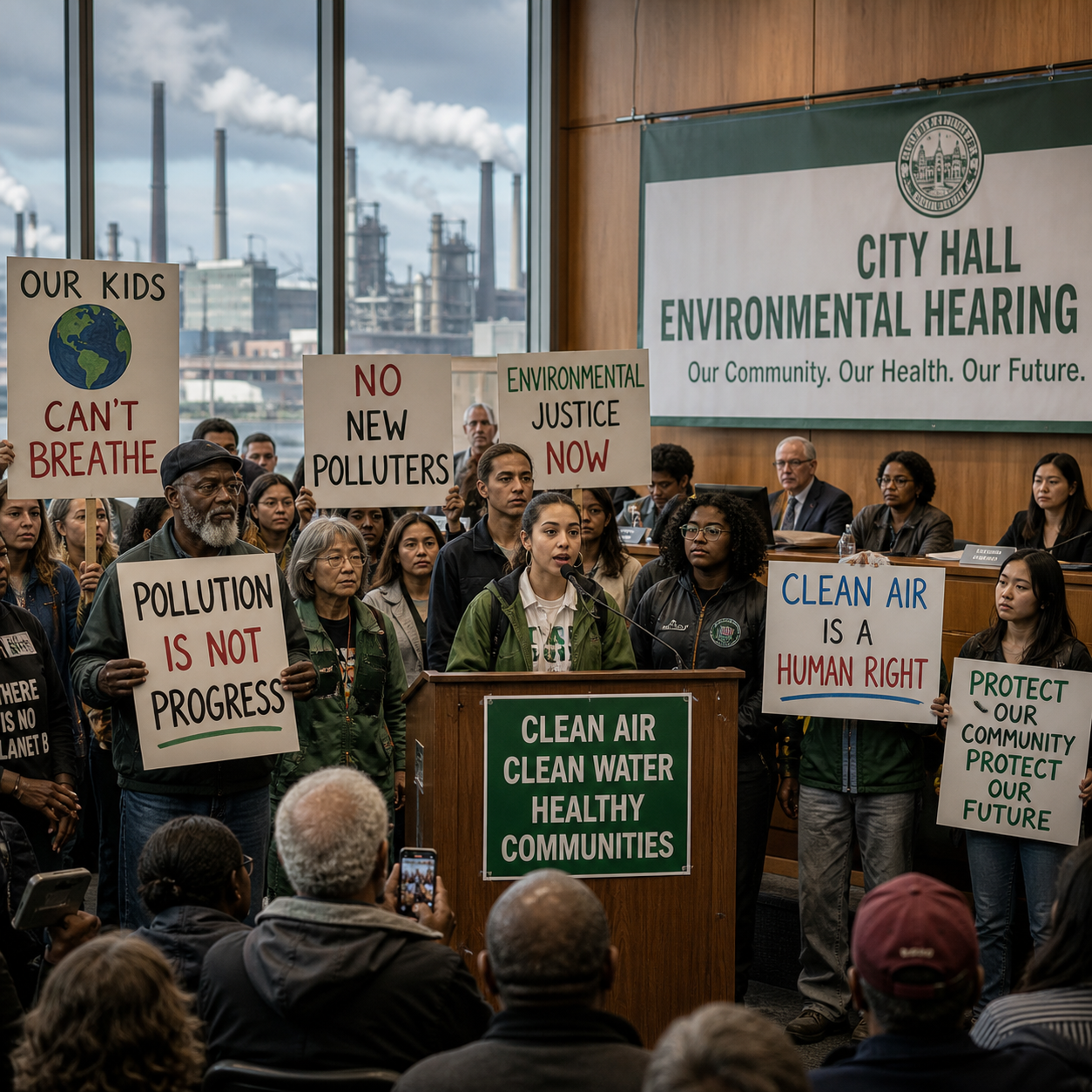
Grassroots organizing often builds narrative infrastructure alongside political infrastructure — training community members to document exposure, speak at public hearings, and engage media. Organizations working at the intersection of environmental justice and policy advocacy have demonstrated that community-driven narratives can shift regulatory priorities, particularly when they connect local harm to broader patterns of systemic inequality. The EPA's environmental justice programs reflect, in part, decades of this kind of sustained narrative and advocacy pressure.
When Narratives Stall Policy: Counter-Framing and Industry Pushback
Pollution narratives don't operate in a vacuum. For every community story demanding regulatory action, there are often well-resourced counter-narratives designed to delay, dilute, or defeat that action.
Industry counter-framing typically works through a small set of recurring strategies. Economic risk arguments emphasize job losses and regional economic damage from proposed regulations. Regulatory overreach framing positions environmental rules as government intrusion into private enterprise. Scientific uncertainty arguments — sometimes called manufacturing doubt — challenge the evidentiary basis for action even when scientific consensus is strong.
These counter-narratives are often effective because they speak to legitimate concerns. Economic disruption from industrial transitions is real, and communities dependent on a single employer face genuine hardship when that employer is regulated out of existence. The problem is when these arguments are deployed strategically to protect profit rather than to address genuine trade-offs — and when they succeed in framing pollution as an acceptable cost of economic activity rather than a preventable harm.
Recognizing counter-framing is not about dismissing economic concerns. It's about understanding that the narrative contest around pollution policy is rarely between truth and lies — it's between competing framings that each capture part of a complex reality, but serve very different interests.
Landmark Policy Shifts Driven by Pollution Storytelling
History shows a recurring pattern: a pollution crisis becomes visible, a compelling narrative takes hold, public concern reaches a threshold, and a policy window opens. The resulting legislation often reflects the specific framing that dominated public discourse at the time.
The environmental legislation of the early 1970s in the United States emerged from a period of intense public concern about industrial pollution — concern shaped substantially by visible events and the journalism and activism that narrated them. The images, the testimony, the popular writing of that era created the political conditions for significant regulatory infrastructure to be built.
Decades later, environmental justice advocates pushed for recognition that existing regulations had not protected all communities equally. That narrative — not just that pollution was harmful, but that its harms were systematically distributed along lines of race and income — eventually influenced how agencies like the EPA approach cumulative impact assessment and community engagement in permitting decisions.
The pattern is not linear. Policy windows close. Political coalitions shift. Legislation passed in one era can be weakened or reversed in another. But the historical record consistently shows that durable regulatory change tends to follow periods when a pollution narrative achieved broad resonance — when enough people, across enough constituencies, understood a harm as unacceptable and preventable.
Building More Equitable Narratives for Future Environmental Policy
The future of environmental legislation depends partly on whose stories get told, with what accuracy, and with what political effect. Building more equitable pollution narratives means addressing the structural inequalities in who gets to speak and who gets heard.
Several principles are emerging from practitioners working at the intersection of environmental justice and communications. First, narrative power should rest with affected communities, not just with outside advocates or journalists who interpret their experience. Second, accuracy matters — stories that overstate or misrepresent harm can be dismantled by opponents and ultimately weaken the cause. Third, connecting local stories to systemic patterns builds the kind of broad coalitions that sustain legislative change over time.
For journalists, this means developing deeper relationships with frontline communities and resisting the pull toward dramatic but unrepresentative events. For researchers, it means investing in science communication that genuinely reaches affected populations. For policymakers, it means creating formal mechanisms — public comment processes, community advisory boards, cumulative impact tools — that treat community narrative as legitimate evidence rather than political noise.
The gap between environmental harm and environmental policy has never been purely a technical problem. It has always been, in significant part, a storytelling problem. Closing that gap requires taking narrative seriously as a dimension of environmental governance — not as manipulation, but as the essential human process through which communities make their suffering legible to the institutions that hold power over their environment.
Frequently Asked Questions
What makes a pollution narrative effective at influencing policy?
Effective pollution narratives combine credible evidence with human stakes. They identify a clear cause of harm, a specific affected population, and an accountable party — and they reach audiences with the political capacity to act. Narratives that connect individual stories to systemic patterns tend to sustain policy momentum longer than those focused on isolated incidents.
How do environmental justice communities differ from mainstream environmental advocacy in their storytelling approaches?
Environmental justice communities typically center lived experience and disproportionate impact rather than ecological or species-focused concerns. Their narratives emphasize racial and economic inequality in who bears the burden of pollution, and they often challenge the adequacy of existing regulatory frameworks rather than simply calling for their enforcement.
Can pollution narratives backfire or lead to unintended policy consequences?
Yes. Narratives that oversimplify complex issues can produce blunt policy responses that miss root causes. Sensationalized coverage can also trigger short-term regulatory action without the sustained political will needed for structural change. In some cases, dominant narratives have led to solutions — like pollution trading schemes — that reduced aggregate emissions while concentrating harm in already-burdened communities.
What role do scientists and researchers play in shaping public pollution narratives?
Scientists provide the evidentiary foundation that gives pollution narratives credibility. When researchers engage in public communication, collaborate with affected communities, or offer accessible expert testimony, they help translate technical findings into the kind of public concern that drives legislative action. Their challenge is communicating genuine uncertainty without undermining the urgency that policy action requires.
How has digital media changed the way pollution stories reach legislators?
Digital platforms have democratized pollution documentation and distribution. Communities can now share evidence of environmental harm directly, bypassing traditional media gatekeepers and reaching both public audiences and legislators more quickly than was previously possible. Social media campaigns, citizen science data, and community-produced video have all become tools in the legislative lobbying toolkit for environmental advocacy organizations.