The Role of Art and Storytelling in Raising Awareness About Pollution
Pollution is often described through measurements: parts per million, toxic exposure limits, emissions inventories, and contaminated-site maps. Those facts matter, but they do not always show what pollution feels like in a child’s asthma attack, a fisher’s empty nets, or a neighborhood living beside a waste facility.
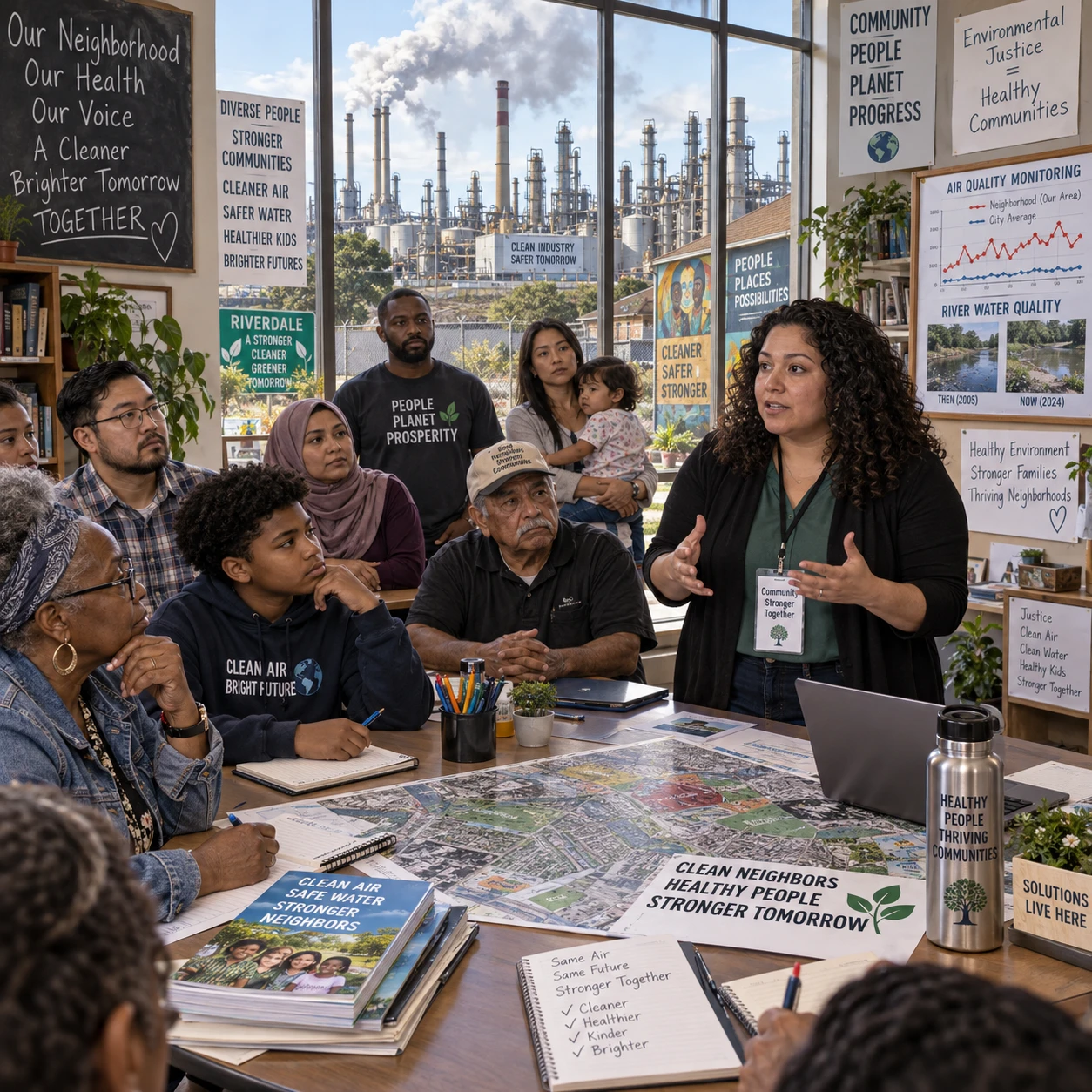
Art and storytelling give environmental communication another layer. They connect scientific evidence to memory, place, culture, and responsibility. When affected people control the narrative, creative work can challenge unequal power, strengthen environmental activism, and help communities move from public awareness toward community-led action.
Why Pollution Needs More Than Facts
Pollution needs more than facts because statistics can describe exposure without explaining its human meaning or unequal distribution. Creative communication makes complex pollution issues easier to understand by linking data with lived experience, place, and accountability.
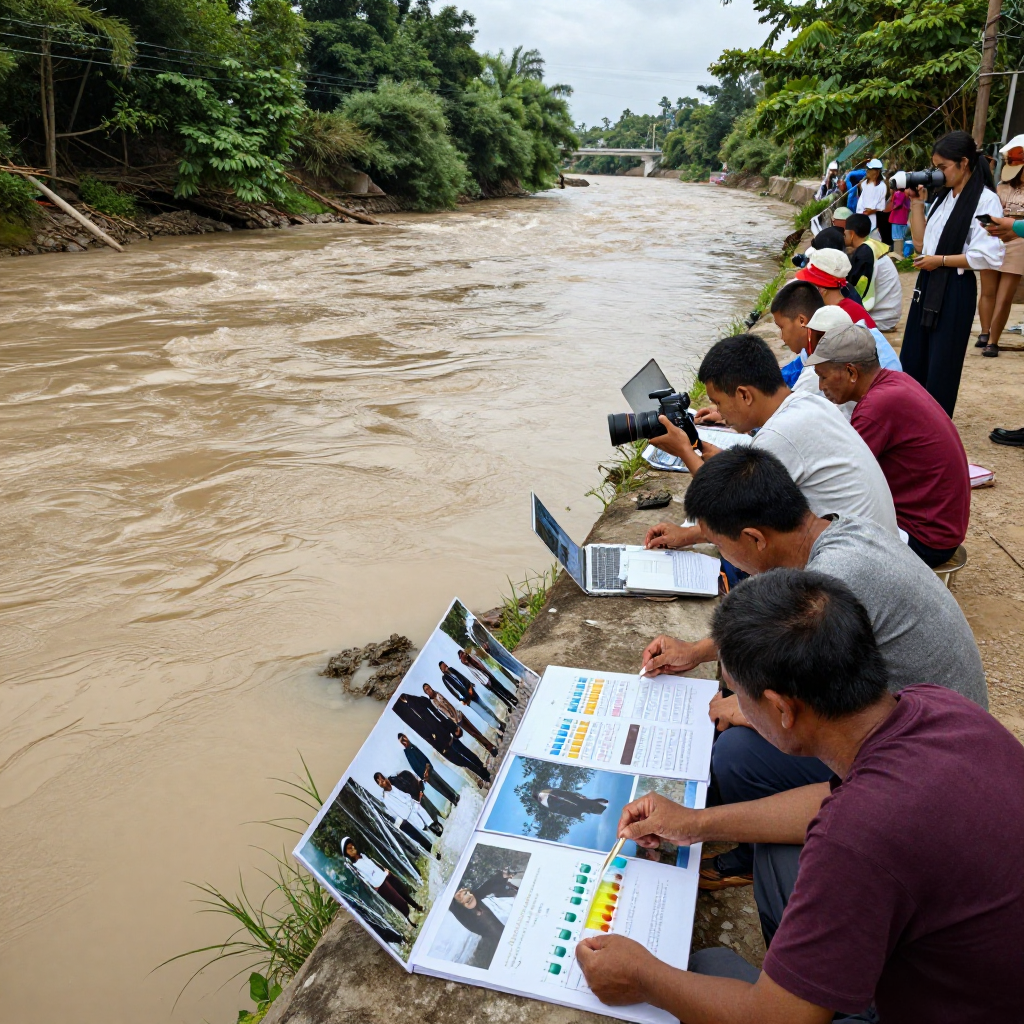
A graph may show elevated particulate matter, while a community story explains why residents keep windows closed, miss work, or worry about children walking to school. A map may identify a contaminated river, but oral history can reveal how that river once supported fishing, ceremonies, recreation, and local employment.
This connection is central to environmental justice. Pollution rarely affects all people equally. Race, income, housing policy, political influence, occupation, and historic disinvestment often shape who lives near highways, refineries, landfills, industrial sites, or unsafe water. Art can make those patterns visible without reducing them to abstract demographics.
Emotion also affects attention. A carefully made photograph, song, animation, or personal testimony may help an audience stay with an issue that initially seems technical or distant. Yet emotion should open the door to evidence, not replace it. Strong environmental communication combines creative work with monitoring data, public records, health information, and clear explanations of policy choices.
How Art Makes Pollution Visible
Art makes pollution visible by representing damaged places, hidden risks, and affected lives in forms that people can see, hear, and feel. Murals, visual art, documentary photography and film, installations, performance, and digital media each reveal different dimensions of environmental harm.
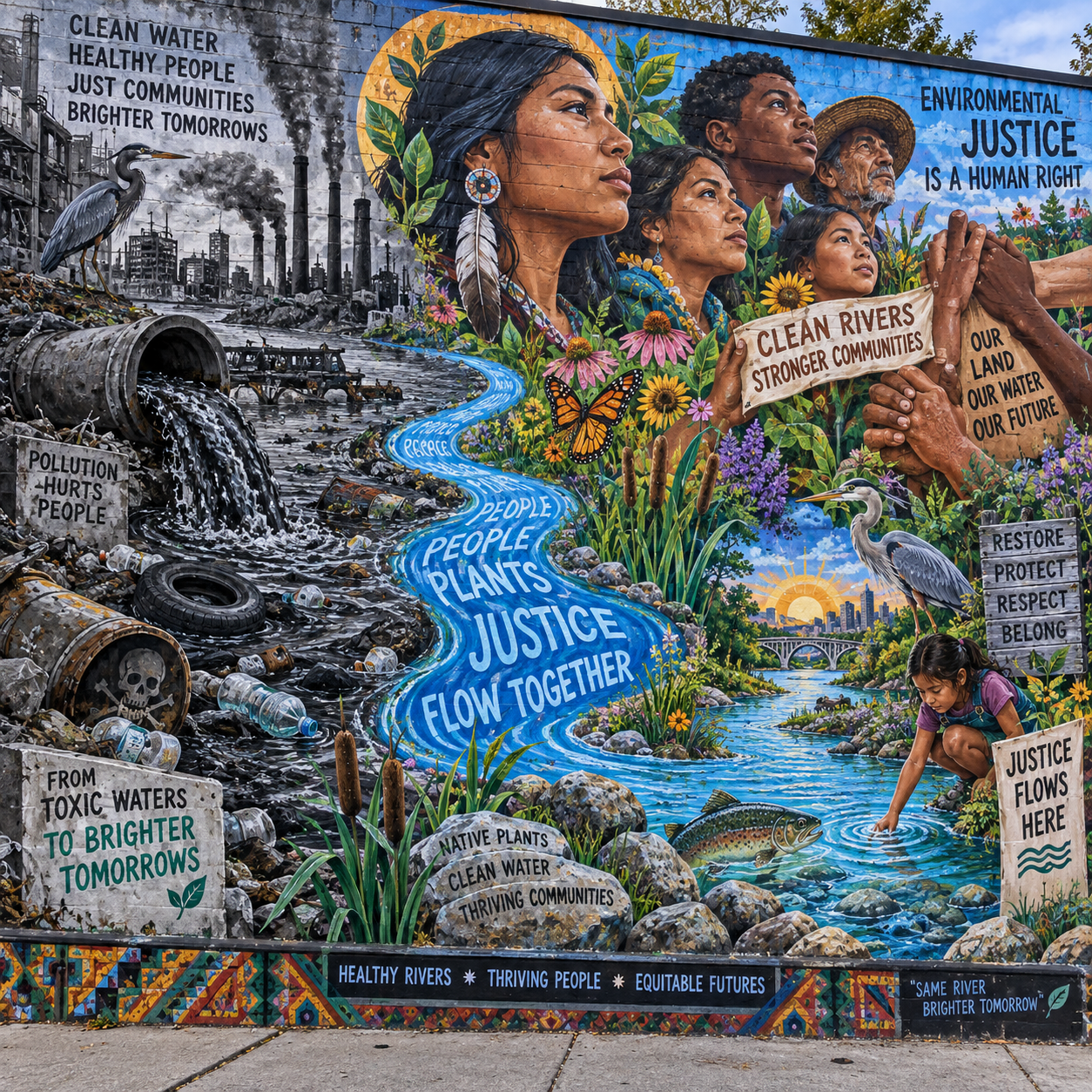
Public art can place an environmental issue directly in everyday life. A mural near a polluted canal might show the waterway’s history, the industries surrounding it, and residents’ demands for cleanup. An installation could use discarded plastics to represent the volume of waste entering a watershed. Performance can turn testimony into a shared civic experience, especially when audiences are invited to respond rather than simply observe.
Documentary photography and film can connect landscapes with the people who inhabit them. A long-term visual project might follow a family navigating air pollution, a worker confronting unsafe conditions, or residents documenting changes in a wetland. The strongest work provides context: captions, interviews, dates, locations, and explanations of the forces producing the pollution.
Digital storytelling expands access through short videos, podcasts, interactive maps, and social media archives. These formats can reach younger audiences and people unable to attend a gallery or public meeting. Their speed is useful, but it also creates risks. A striking image can circulate widely after losing its location, context, or original creator’s voice.
Creative formats should therefore be selected for purpose. A mural may build local visibility, documentary film may support education, and an interactive map may help residents identify patterns. No single format can represent every experience.
Storytelling and the Human Experience of Pollution
Storytelling explains how pollution affects health, livelihoods, culture, and relationships over time. Personal, local, and intergenerational narratives add context that a one-time statistic cannot provide.
A resident’s account may describe headaches, medical costs, missed school, or the stress of interpreting changing air-quality warnings. A farmer may explain how polluted irrigation water affects soil and income. A community elder may remember when a wetland filtered floods or when a shoreline supported customary food gathering. These details show that pollution is more than a chemical event; it can disrupt a whole social system.
Community storytelling also preserves knowledge that formal institutions may overlook. Oral histories can identify recurring odors, unusual illnesses, fish die-offs, or changes in seasonal patterns. Indigenous knowledge may offer long-term observations about water, wildlife, fire, and land stewardship. It should not be treated as decorative background. When shared with consent, it can shape research questions, restoration priorities, and public debate.
Stories become especially powerful when they connect individual experience to structural causes. Instead of presenting asthma as a private problem, a narrative can show traffic corridors, zoning decisions, industrial permits, housing insecurity, and gaps in enforcement. This prevents pollution from being framed solely as a matter of personal behavior.
Good storytelling preserves complexity. Communities may have different views about a factory that provides jobs while creating health concerns. Including those tensions produces a more credible account and makes room for solutions such as stronger safeguards, worker protections, cleaner production, and economic transition.
Centering Communities Through Environmental Justice
Environmental justice requires communities affected by pollution to have meaningful control over how their experiences are represented and used. Representation, consent, Indigenous perspectives, and community ownership should guide every creative project.
Outsiders often arrive with cameras, grants, or media access and leave with the story. A community-centered approach reverses that pattern. Residents help define the issue, choose participants, review materials, and decide where the work will appear. Compensation, training, credit, translation, and data protection should be planned from the start.
Consent must be ongoing rather than a single signature. People should understand the audience, distribution channels, possible risks, and whether images or testimonies can be reused. Children, undocumented residents, workers, and people discussing illness may face particular vulnerabilities. An ethical project allows participants to withdraw or revise material when circumstances change.
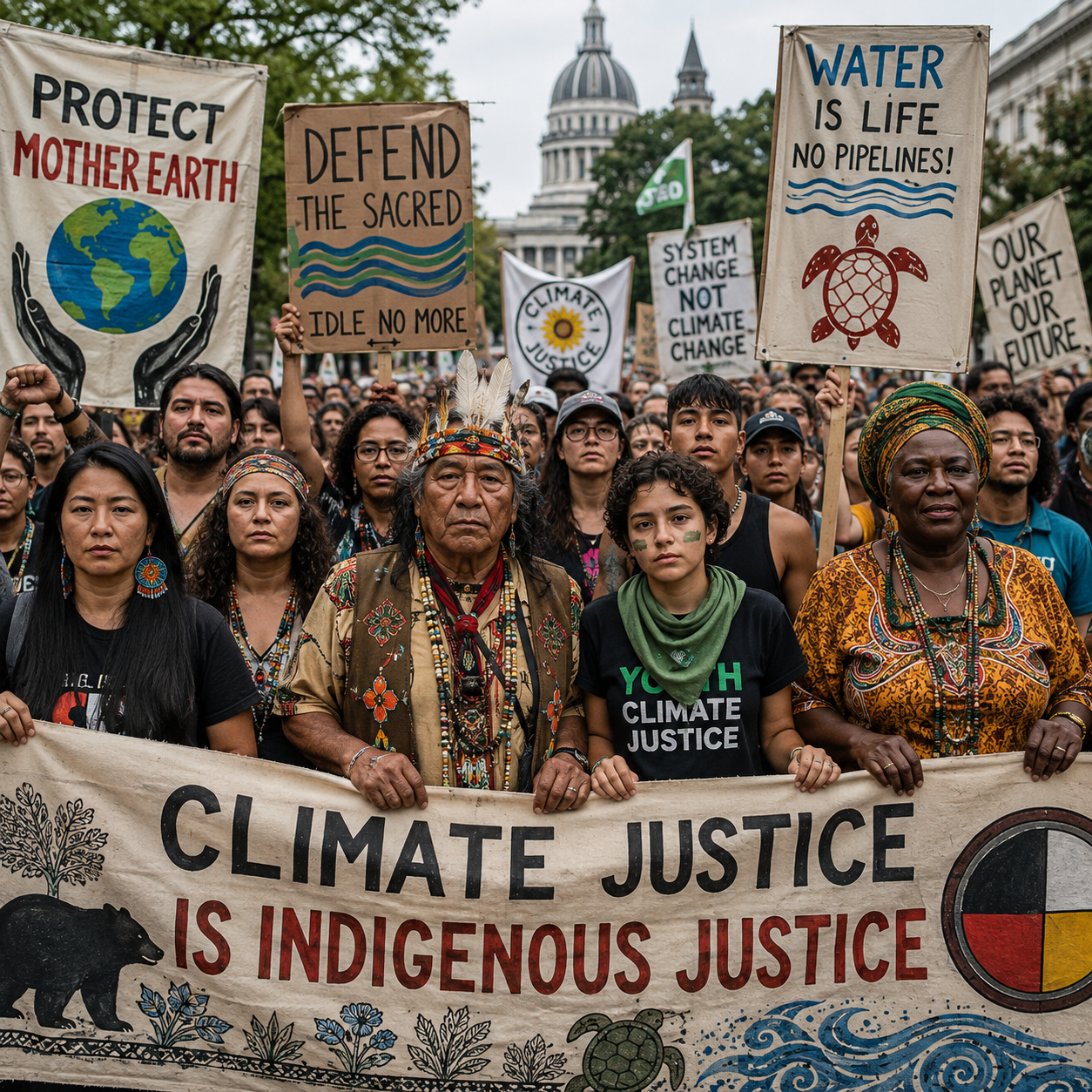
Indigenous knowledge requires additional care because cultural knowledge may be collective, place-specific, or governed by community protocols. Artists and researchers should not extract sacred stories, ecological knowledge, or images for public use without authorization. Partnership with Indigenous-led organizations can establish appropriate boundaries.
Community ownership does not mean every participant must agree on every message. It means the process recognizes local authority and avoids turning suffering into visual material. The goal is agency: people should appear as witnesses, organizers, experts, workers, parents, artists, and decision-makers, not only as victims.
From Awareness to Accountability and Action
Art can lead from awareness to action when it is connected to evidence, organizing, civic participation, and specific demands. A compelling story creates attention; community-led action determines how that attention is used.
Creative work can support environmental activism in several practical ways:
- Education: Teachers and community groups can pair a film or mural with lessons on exposure pathways, local history, and environmental law.
- Public participation: Exhibitions and performances can invite residents to attend hearings, submit comments, or join advisory boards.
- Accountability: A visual timeline can connect pollution incidents with permits, inspections, corporate ownership, and government responses.
- Organizing: Shared symbols, songs, posters, and stories can strengthen campaigns for monitoring, cleanup, safer jobs, or enforcement.
- Restoration: Art can document ecological repair and keep institutions accountable after public attention moves elsewhere.
The link between art and policy should be explicit. A campaign might present resident portraits alongside air-monitoring results and a demand for stronger emissions controls. A digital story could direct viewers to a public-comment deadline or a community meeting. Without such pathways, attention may produce sympathy but little institutional change.
Artists and organizers can also use public records and regulatory information to identify responsible actors. Accountability should not fall only on individuals choosing products or recycling. Corporations, regulators, planners, and elected officials often control the systems that generate and distribute pollution.
Ethical and Practical Considerations
Ethical pollution storytelling protects dignity, provides context, and avoids turning environmental suffering into spectacle. Effective work balances emotional power with accuracy, community agency, and realistic routes to change.
Avoiding common mistakes
- Using suffering without consent: Dramatic images attract attention, but unauthorized photographs can expose people to stigma or retaliation. Obtain informed consent and let participants approve sensitive material.
- Oversimplifying the cause: Blaming individual choices hides industrial, governmental, and structural responsibility. Explain the policies, supply chains, permits, and enforcement failures behind the pollution.
- Relying only on fear: Fear can produce numbness or helplessness. Pair risks with community knowledge, credible evidence, achievable demands, and examples of collective capacity.
- Accepting greenwashing: A corporation may sponsor an exhibition while resisting cleanup or stronger regulation. Examine funding, disclosure, claims, and the organization’s measurable conduct.
Accuracy matters even in expressive work. Artists should verify locations, dates, health claims, and scientific explanations with qualified sources. Organizations such as the U.S. Environmental Protection Agency’s environmental justice program provide useful public information, although local residents and independent experts may reveal gaps in official accounts.
How to Create Effective Pollution Stories
To create an effective pollution story, identify the issue, center lived experience, add evidence, name responsibility, and provide a meaningful path to action. This five-part framework helps artists, educators, activists, and community organizations avoid compelling but incomplete narratives.
- Identify the issue and place. Define the pollutant, exposure route, affected area, and historical context. Ask whether the story concerns air, water, soil, waste, noise, heat, or multiple forms of pollution.
- Center lived experience. Invite residents to describe health, work, culture, family, and environmental change in their own words. Include local and Indigenous knowledge where communities authorize its use.
- Add context and evidence. Pair testimony with monitoring data, maps, scientific findings, public records, and policy history. Explain uncertainty honestly rather than exaggerating conclusions.
- Show responsibility and power. Identify relevant companies, agencies, permits, zoning decisions, enforcement gaps, and political choices. Avoid implying that affected people caused the conditions they endure.
- Offer meaningful action. Give audiences a specific next step: attend a hearing, support community monitoring, contact a decision-maker, donate to a local organization, join restoration work, or share a verified resource.
Before publication, ask three final questions: Who controls the story? Who benefits from its circulation? What could happen to participants afterward? Those questions turn environmental communication into a practice of responsibility rather than extraction.
Art and storytelling cannot replace science, policy, or organizing. They can help those efforts reach people, build trust, preserve memory, and make injustice harder to ignore. When creative work is grounded in consent, evidence, and community power, it can transform pollution from an invisible technical problem into a shared public responsibility.
Frequently Asked Questions
How does art raise awareness about pollution?
Art raises awareness by making pollution visible, emotional, and locally meaningful. Murals, photography, film, performance, and installations can connect scientific information with affected places and people.
Why is storytelling important in environmental justice?
Storytelling shows who experiences pollution, how harm is distributed, and which historical or political decisions produced it. Community stories also protect lived experience and local knowledge from being excluded from public debate.
What types of art can communicate pollution issues?
Useful formats include public art, documentary photography and film, oral history, theatre, music, poetry, digital storytelling, interactive maps, installations, and participatory workshops. The best format depends on the audience, purpose, and community preferences.
How can communities tell their own pollution stories?
Communities can form resident-led storytelling teams, train local photographers or interviewers, collect oral histories, create public murals, and establish consent and data-sharing rules. Community organizations can also partner with artists while retaining editorial control.
Can art lead to environmental action?
Yes, art can support environmental action when it connects audiences to evidence, organizers, decision-makers, and specific demands. Awareness alone is limited, so creative work should include practical routes to civic participation, accountability, restoration, or policy change.